
Mrs. Sau has sold pho at the mouth of the same alley for nearly twenty years (an illustrative example). There's no real sign, just a faded tarp, and yet every table is full by seven: the broth is clear and fragrant, she remembers which regular wants extra spring onion and who takes fewer noodles, and the steel tables are wiped dry before anyone sits down.
Last year her son came home to help. He commissioned a handsome lightbox sign with a stylized steaming-bowl logo and launched a Facebook page full of professional photos. Around the same time, he switched to a cheaper bone supplier and put a new hire on the stove. Three months later the regulars were thinning out, even though passers-by still stopped to photograph the sign.
So what exactly did the shop lose?
The sign and the broth
The new sign is identity, and to be fair, it's a big improvement on the tarp. The broth, Mrs. Sau's memory for every regular, the table wiped dry before you sit: everything that brought people back each morning was the brand. Her son refreshed the small part and quietly dropped the big one.
A brand is the overall impression customers, partners and employees hold of your business, shaped by your products, service, behavior and visuals. Brand identity, on the other hand, is the part you deliberately design to express that impression: name, logo, colors, typefaces, imagery and tone of voice. Building a company brand, then, means moving from strategy (why the business exists, whom it serves, how it differs) to identity (name, logo, colors, voice), and keeping both consistent everywhere customers meet you.
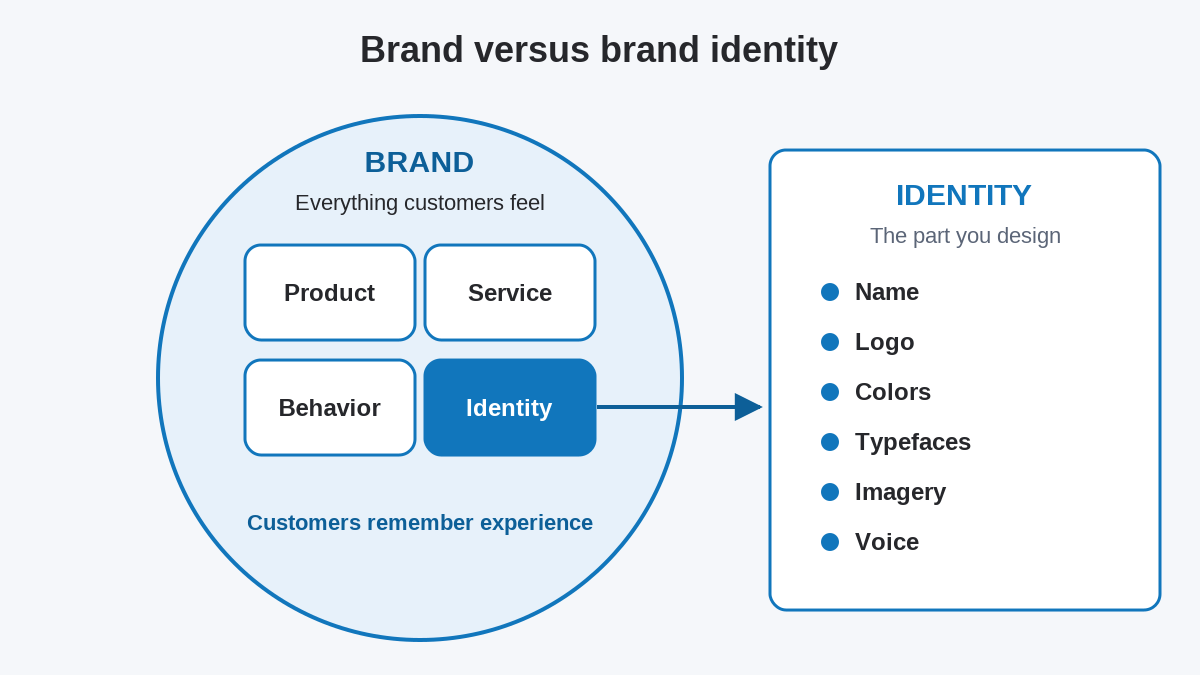
A view shared across many design-practice guides is that the visual layer should come after the strategy is settled. The reason is simple: every choice of color or typeface needs a criterion to choose by. And a brand isn't only a marketing job, either. The way one of your staff answers a customer's call is shaping your brand too.
Ring your own company's main number sometime and listen to how you're greeted. That's your "audio identity", and very few businesses ever notice it.
Six steps, from the foundations up
Anyone who has built or renovated a house knows the order: foundations first, then the frame, and only then the paint and curtains. Nobody picks curtains before knowing how many windows the house has. Building a brand follows exactly the same sequence.
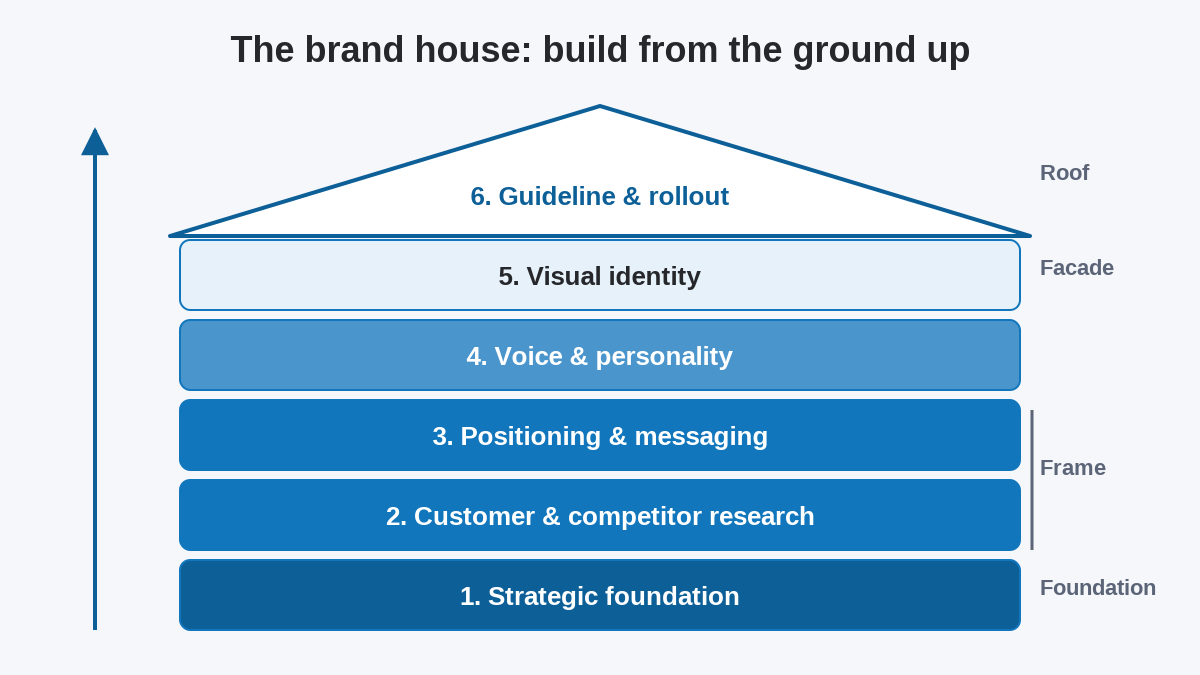
Step 1: Set the strategic foundation
Answer the core questions in writing. Frontify's brand identity checklist suggests starting with a long-term vision, a mission, core values, and both the internal audience (employees) and the external audience (customers). For a small company, one page is plenty:
- What problem do we solve, and for whom?
- Which three values do we genuinely live by every day (not three nice words for the wall)?
- How do we want to be known five years from now?
Step 2: Research customers and competitors
Fabrik Brands, a branding consultancy, stresses market and competitor research to find gaps you can occupy. You can keep it lean: interview five to ten customers, review the websites and materials of five competitors, note how they sound and how they look, and choose a direction that stands apart. What you learn here feeds straight into positioning.
Step 3: Settle positioning and messaging
Positioning is your answer to "why should customers choose us?". Write a positioning statement and three supporting message pillars; the full method is in our article Brand Positioning for SMEs. Our friendly advice: don't move on to design while this step is still fuzzy.
Step 4: Define voice and personality
Voice is how the brand writes and speaks: formal or friendly, brief or explanatory. Frontify suggests adjusting tone for different audiences and platforms while keeping the same personality. It's like the way you speak differently to your boss and to your best friend, yet you're still recognizably you. A consulting firm, for example, might choose "steady, clear, respectful of the client's time" (illustrative) and use it as the test for every email, quote and post.
Step 5: Design the visual identity
In Fabrik Brands' process, the design work covers a direction and mood board, a color palette and typography, the logo, and then supporting elements such as imagery, icons, stationery templates and signage. You can judge a logo on four things: meaning, longevity, versatility across media and channels, and distinctiveness. A logo that looks sharp on a laptop screen but blurs into a smudge when embroidered on a staff polo shirt isn't a great logo yet.
A practical note for Vietnam: check whether your name and logo clash with, or look too close to, trademarks already registered, and consider registering your own mark. A name should also be easy to read, easy to type with Vietnamese diacritics, and free of unfortunate meanings when spoken aloud. For trademark registration, consult an IP representative or a lawyer.
Note: The legal information in this article is a summary based on the Kingsley Asia team's analysis of documents and sources published at the time of writing (11/2026). Policies may change; please confirm with a lawyer or accountant before acting on it.
Step 6: Write the guideline and roll out
A brand guideline records every decision so everyone applies it the same way. According to Fabrik Brands, it typically covers colors (with codes), the logo (versions and usage), typography, and examples of correct and incorrect use. Frontify adds a central place to store assets, onboarding for new staff, retiring outdated materials and naming who approves what. After launch, keep listening to feedback and update the guideline periodically.
The Step 1 page takes one sitting to write, and one clear handwritten page is worth more than a beautiful logo that nobody can explain.
Summary of the six steps
To make it easy to follow and to hand out tasks, here are the six steps in one table, with the key question and the output of each.
| Step | Key question | Output |
|---|---|---|
| 1. Foundation | Who are we and why do we exist? | Vision, mission, values |
| 2. Research | Where are customers and competitors? | Interview notes, competitor map |
| 3. Positioning | Why do customers choose us? | Positioning statement, messages |
| 4. Voice | How do we speak? | Voice description, writing examples |
| 5. Identity | How do we look? | Logo, colors, typefaces, imagery |
| 6. Guideline and rollout | How do we stay consistent? | Brand guideline, approval process |
Customers rarely remember how pretty your logo was. They remember how you treated them.
Quick review checklist
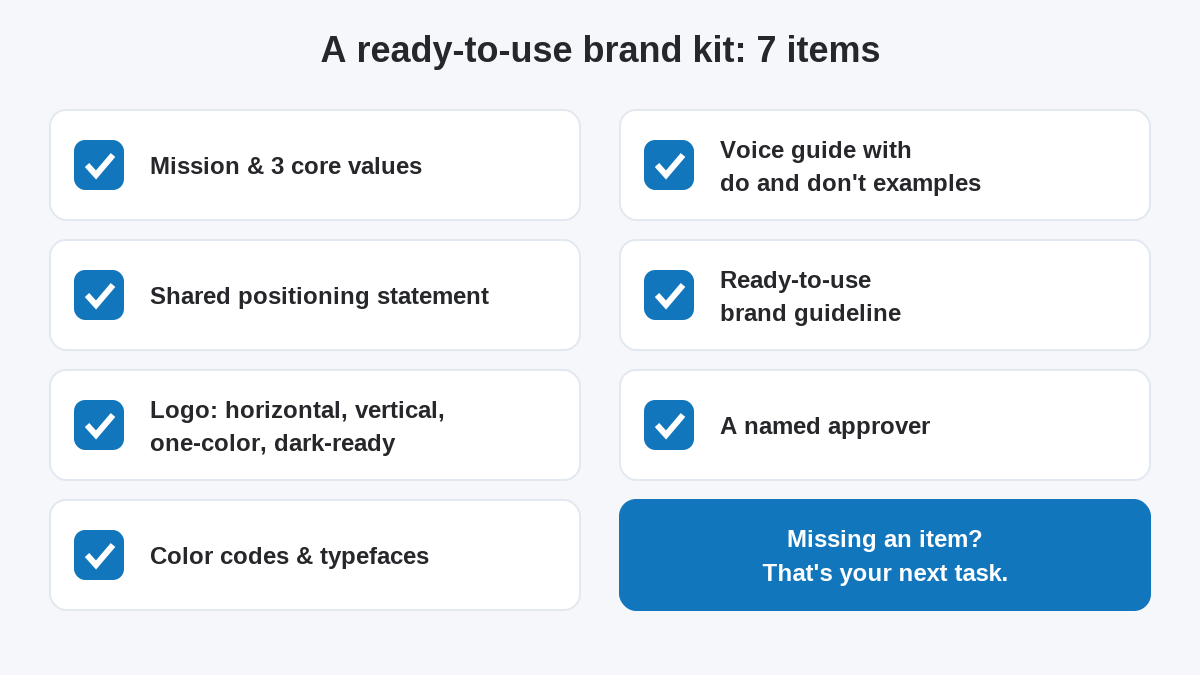
Already have a logo and a few materials? No need to tear anything down. Tick through this checklist line by line; whatever is still blank is your next task.
- Are the mission and three core values written down?
- Is there a positioning statement the whole team explains the same way?
- Does the logo come in horizontal, vertical and one-color versions, and work on dark backgrounds?
- Are there color codes for print and screen, and typefaces for headings and body text?
- Is there a voice description with do and don't examples?
- Is there a guideline that new hires and design partners can use immediately?
- Does someone own approval of published materials?
Four traps that make a brand drift
A brand project wraps up, and a few months later everything has drifted in different directions. It usually traces back to one of these four traps.
- Starting with the logo. It's like painting a house before anyone has drawn the plan. The classic ending: the leadership team spends two weeks debating blue versus orange, and nobody can explain the winner beyond "it looks more premium."
- Too many versions. When every department makes its own templates, the company starts to look like a jacket patched with five different fabrics.
- Treating branding as a one-off. Frontify notes that identities change over time and should be reviewed regularly.
- Beautiful design that doesn't match the service. If the real experience differs from the promise, customers remember the experience. Very few remember the gold-foil business card.
Quotes, email signatures, each department's company profile, laid side by side on one table: five minutes of looking tells you how consistent your brand really is.
How Kingsley Asia can help
We tend to get called in at one of two moments: when a company is about to commission a logo without any positioning, or when the logo exists but every department uses it differently. Either way, Kingsley Asia works with you from the one-page strategic foundation to the brand guideline, and hands the design work to a partner in our network with the right specialism. Details are on Brand Identity & Integrated Marketing; or send us a few of your current materials and we'll look together at what they're saying about you.
Sources
- Fabrik Brands – Brand identity process: a step-by-step guide to visual identity design (accessed 2026)
- Frontify – Brand identity checklist (accessed 2026)
- Column Five Media – How to create a brand strategy (accessed 2026)

Kingsley Asia
The Kingsley Asia consulting team – helping Vietnamese SMEs and international investors from strategy to execution.